


Halal food, governed by Islamic dietary laws, plays a significant role in the daily lives of millions of Muslims in the UK. With a growing Muslim population and increasing demand for halal products, questions around regulation, certification, and consumer protection have become more prominent than ever.
But is halal food regulated in the UK, and if so, how? The answer lies in a complex system where government food safety standards intersect with voluntary religious certification.
This dual structure offers a basic layer of protection through national food laws while leaving halal compliance largely in the hands of private certifying bodies.
This article offers an in-depth look at how halal food is regulated in the UK, who oversees its compliance, and the challenges involved in ensuring authenticity and consumer trust.
What Does ‘Halal’ Mean According to Islamic and UK Standards?
The word halal means “permissible” in Arabic and refers to anything allowed under Islamic law. While it applies broadly to behaviour, finance, and lifestyle, its most well-known application is in the context of food.
For food to be halal:
- It must not contain forbidden (haram) ingredients such as pork, blood, or alcohol.
- Meat must be sourced from animals slaughtered in accordance with Islamic practices.
- The slaughter must be carried out by a mentally sound Muslim invoking the name of Allah.
- The animal must be alive and healthy at the time of slaughter, and the blood must be fully drained.
- The process must avoid unnecessary suffering and contamination with non-halal products.
In the UK, while these religious principles define the core of halal, there are also mandatory regulations for food safety and hygiene, which all food businesses must comply with, regardless of religious context.
Who Regulates Food Safety and Halal Slaughter Practices in the UK?
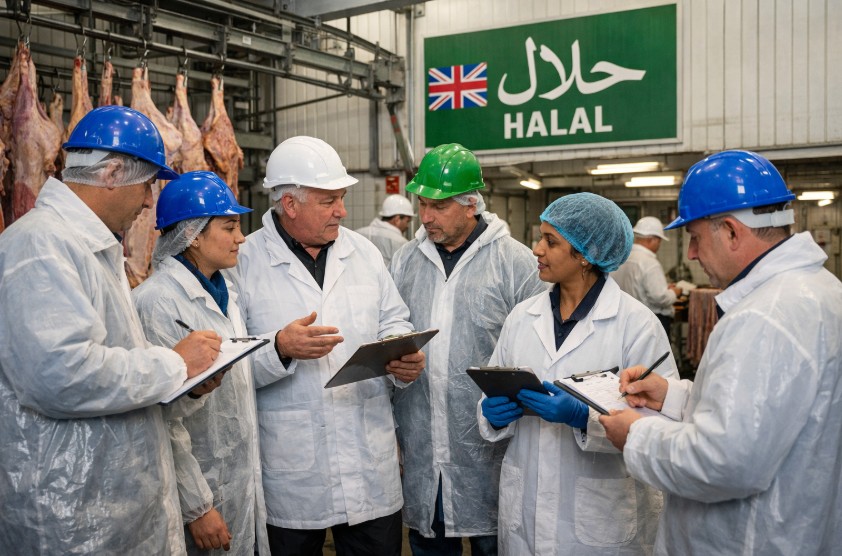
Food safety and hygiene in the UK are regulated by the Food Standards Agency (FSA). This government body ensures that all meat processing facilities and slaughterhouses meet strict health and welfare requirements.
For halal meat, the regulation becomes twofold:
- Government Oversight: The FSA ensures that all animal slaughter (halal or otherwise) complies with national animal welfare laws, hygiene practices, and traceability.
- Religious Exemptions: UK law allows exemptions to stunning for religious slaughter (halal and kosher). However, the FSA encourages stunning prior to slaughter for animal welfare, although it is not mandatory for halal-certified producers.
Slaughter without stunning is legally permitted but strictly controlled. Slaughtermen must hold a certificate of competence, and the facility must be approved for religious slaughter practices.
How Do Halal Certification Bodies Operate in the UK?
Halal certification in the UK is voluntary and managed by independent religious organisations. There is no single governing body or universally accepted standard, leading to differing interpretations of what qualifies as halal.
Major Certification Bodies
Several prominent halal certifiers operate across the UK, including:
- Halal Monitoring Committee (HMC): Known for strict no-stunning policies.
- Halal Food Authority (HFA): Allows reversible stunning.
- Universal Halal Authority (UHA): Offers certification for both stunned and non-stunned methods, based on consumer preference.
Each of these bodies sets its own certification criteria, inspects suppliers, and grants halal logos or marks to approved products.These differences can lead to consumer confusion, especially regarding meat sourced from stunned animals.
Certification Scope
Certification generally covers:
- Slaughtering methods
- Ingredient sourcing
- Cross-contamination controls
- Processing equipment and hygiene
- Labelling and packaging
Due to the variation in standards, trust in certification often depends on brand recognition and consumer education.
Why Is There No Single Unified Halal Standard in the UK?
The absence of a government-mandated halal standard is a result of the UK’s secular regulatory framework and respect for religious freedom. Instead of enforcing one definition of halal, the government allows religious communities to self-regulate.
While this protects religious autonomy, it introduces inconsistency. Some certification bodies accept stunning, while others consider it unacceptable. As a result, a product certified as halal by one body may not be accepted by followers of another.
This decentralised model creates several issues:
- Difficulty in enforcing uniform quality or practices
- Confusion among consumers about what they’re buying
- Lack of legal recourse in cases of mislabelled halal products
Efforts have been made to push for harmonised halal standards or mandatory labelling, but these are still under discussion.
What Are the Requirements for Halal Slaughter, With or Without Stunning?
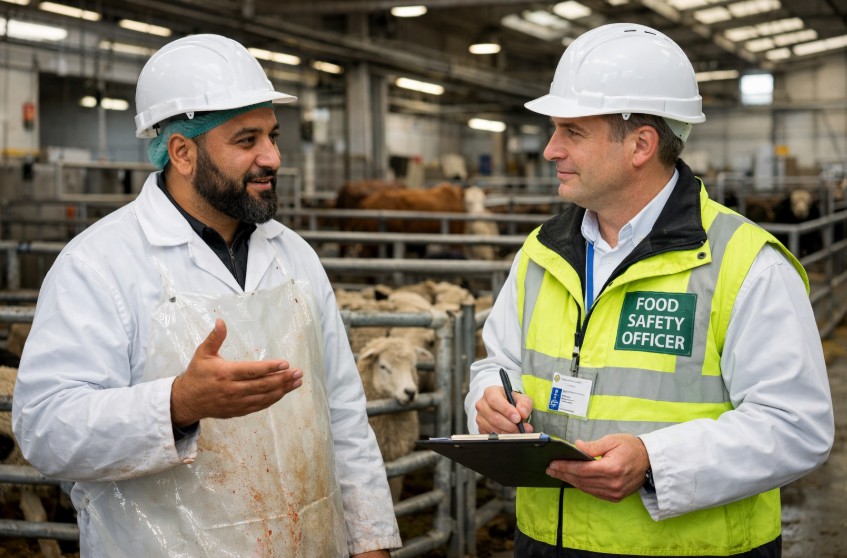
In halal slaughter, the method of killing the animal is a central concern. There are two dominant approaches:
| Aspect | Pre-Stunning | Non-Stunned Slaughter |
| Animal Condition | Rendered unconscious but alive | Fully conscious and alive |
| Acceptability | Accepted by some certification bodies | Mandatory by others (e.g. HMC) |
| UK Law Compliance | Complies with both halal and animal welfare laws | Permitted under religious exemption |
| Consumer Debate | Viewed as more humane by some | Seen as more religiously authentic by others |
The FSA prefers stunning but allows non-stunning for religious reasons. The key requirement is that the animal is alive and healthy before the cut is made, and that all necessary Islamic invocations are recited.
The bleeding must be complete, and the knife must be razor-sharp to reduce suffering. Additional controls are applied to ensure humane treatment throughout the process.
How Are Halal Products Labelled and Verified for Consumers?
Unlike some countries, the UK does not require mandatory halal labelling. Instead, businesses voluntarily add certification marks to packaging to indicate halal compliance.
When Labels Are Used?
Halal logos on products typically come from recognised certifying bodies. These marks serve as a visual assurance to consumers.
However, because of varying standards, the presence of a logo doesn’t always clarify if the meat is stunned or not, unless the certifier has a known policy.
When Labels Are Missing?
In restaurants, takeaways, and butchers, consumers often have to ask questions or trust the retailers claim. Without regulatory enforcement on halal labelling, theres room for misleading or vague information.
This lack of transparency is why consumer advocacy groups and many in the Muslim community are calling for mandatory disclosure, particularly around the use of stunning.
Where Does KFC Stand on Halal Compliance in the UK?
As one of the UKs major fast-food chains, KFC halal compliance has drawn significant public attention. Select KFC outlets in the UK do offer halal options, but only in certain regions and under strict oversight.
These restaurants:
- Use certified halal suppliers approved by external halal bodies.
- Ensure no cross-contamination with non-halal items.
- Follow religious slaughter methods according to certification.
However, not all KFC branches serve halal meat, and KFC makes this clear via store signage and their website.
This selective halal offering highlights the commercial balancing act between demand, compliance, and broader public expectations.
How Do Consumers Identify Authentic Halal Products?
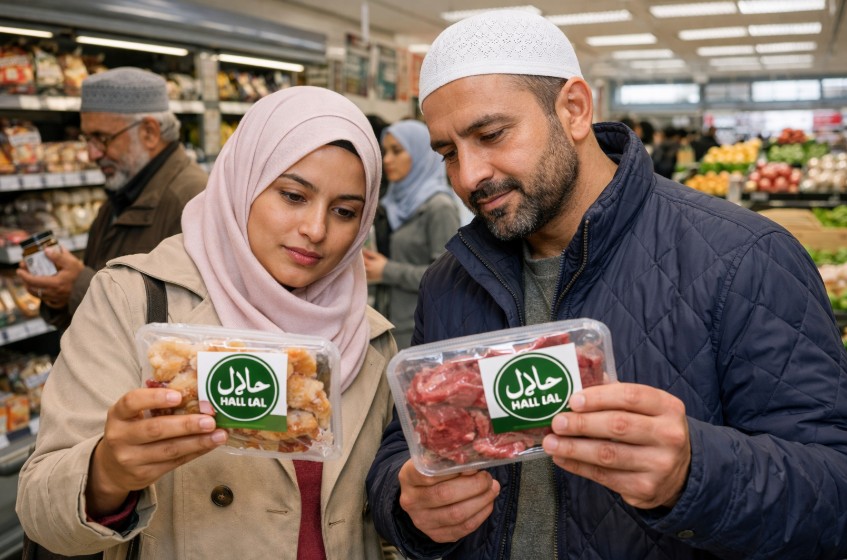
Consumers in the UK play a proactive role in ensuring they purchase genuine halal products. Given the lack of uniform regulation, vigilance is necessary.
Heres how consumers can verify halal compliance:
- Look for Certification Marks: Prefer products with visible halal logos from trusted bodies like HMC or HFA.
- Ask Questions: Inquire about slaughter methods, certification bodies, and sources.
- Use Trusted Retailers: Shop at butchers, grocers, or supermarkets with a strong reputation for halal compliance.
- Read Ingredient Labels: Especially for processed or imported items that may contain gelatine, emulsifiers, or alcohol-based additives.
| Verification Method | Benefits |
| Certification Logo | Quick visual check for assurance |
| Retailer Reputation | Builds long-term trust and reliability |
| Ingredient Scrutiny | Helps avoid hidden non-halal substances |
| Direct Inquiry | Clarifies doubts and uncovers supply chain info |
Consumers are increasingly using apps and websites to cross-reference certification status or product listings, making the halal buying process more transparent.
What Are the Key Challenges in Halal Food Regulation Today?
Despite existing frameworks, halal food regulation in the UK faces multiple challenges that impact producers, certifiers, and consumers.
- Standardisation Gap: The absence of a unified halal standard leads to confusion and inconsistency in practices.
- Labelling Ambiguity: Voluntary labelling allows room for misrepresentation, especially in non-packaged food settings.
- Consumer Trust: Differing stances on stunning, ingredient interpretation, and certification credibility affect confidence.
- Regulatory Oversight: While the FSA monitors hygiene and safety, there is no formal mechanism to verify halal claims outside of food law.
- Cross-Contamination Risks: Especially in mixed production facilities, where halal and non-halal items are processed together.
Addressing these challenges may involve government collaboration with certification bodies, enhanced public education, and possibly the introduction of national halal labelling requirements.
Conclusion
So, is halal food regulated in the UK? Yes, but not in the way many might assume. While the FSA governs food safety and religious slaughter practices, the actual halal status of a product is determined by voluntary, independent certification bodies.
This creates a dual regulatory framework where religious compliance and legal safety standards coexist, but do not always align perfectly.
For consumers, this means understanding the differences between certification bodies, actively seeking information, and choosing trusted retailers. As the demand for halal products continues to grow, the debate around standardisation, labelling, and consumer rights will only become more urgent.
Frequently Asked Questions
Are halal cosmetics and pharmaceuticals regulated in the UK?
Yes, halal certification also extends to non-food items like cosmetics and medicines. These products must be free from haram ingredients and contamination.
What is the difference between halal and kosher slaughter in UK law?
While both have religious exemptions, kosher requires a Jewish shohet, while halal requires a Muslim slaughterman. The methods and religious rituals differ.
Can halal food be served in UK public institutions like schools or hospitals?
Yes, many UK schools, hospitals, and prisons offer halal options. These are usually sourced from certified suppliers.
Do all supermarkets in the UK offer halal-certified products?
Most major supermarkets have a dedicated halal section, but availability and certification may vary by region.
Is non-stunned halal meat legal in the UK?
Yes, it’s permitted under religious exemption laws. However, it’s regulated and must take place in licensed facilities.
Are there penalties for falsely labelling food as halal in the UK?
Yes, businesses found mislabelling food can face legal action under UK food law, including fines or licence suspension.
How does halal certification affect UK food exports to Muslim-majority countries?
Exporters often require halal certification from internationally recognised bodies to access markets in countries like Saudi Arabia or Malaysia.